
IEA SHC Solar Academy: Solar Hot Water for 2030: An IEA SHC Task in Review (1)
Hot water demand for kitchen and sanitary use is continuously growing globally and as countries adopt commitments and targets to run their economies on renewable energy, the IEA Solar Heating and Cooling Program asked the question: How can solar hot water contribute to the sustainable energy transition for 2030?
Solar hot water has an installed base of ~800 million m2 (made up of glazed and unglazed thermal collectors), solar only supplied 12% (456 TWh) of the 3,750 TWh global residential hot water energy consumption. However, for the last 3 years Task 69 has worked on the barriers and opportunity to re-accelerate solar hot water’s development path through identifying best practices, emerging solar hot water components and systems, and mapping out the policy gaps for 2 technologies:
- Thermosyphons: The incumbent solar champion (~57% of domestic hot water systems in operation in 2019)
- PV Hot Water: The emerging player (anything from simple PV2Heat direct systems to advanced systems which aim to soak up excess PV).
In this webinar we will review some of the key results from Task 69 on thermosyphon systems (i.e., failure modes, success stories, and advances, presented by STB lead Bojia LI) and on PV water heaters (i.e., configuration options, opportunities, barriers, and policy needs, presented by STC lead Tony Day).
Speakers:
- Prof Li Bojia (Solar Energy Application Center, China Academy of Building Research): “GHG Emissions Reductions Testing in China for Thermosyphon Systems”
- Tony Day (Independent Consultant / IERC): "PV Hot Water configurations, opportunities, barriers, and policy needs"
- Prof Robert Taylor (University of New South Wales): "Introduction and Task 69 Overview"
Moderator:Bärbel Epp (Solrico)
The webinar is organised by the Solar Academy of the IEA Solar Heating and Cooling Programme and hosted by ISES, the International Solar Energy Society.
Special announcement - Webinar re-run on 30 October 2025
ISES and the IEA SHC Solar Academy are happy to announce that this webinar will be broadcast again on 30 october 2025 at 6 AM GMT/UTC to accommodate our global audience, especially from Australia and Asia. This webinar consists of a BROADCAST of the presentations in the first part of the event (presentations recorded as video) and includes a LIVE Q/A with the speakers in the second half of the event.
To learn more and register for the webinar on 30 October, please visit this page.
Webinar presentations
Speakers
Prof Li Bojia
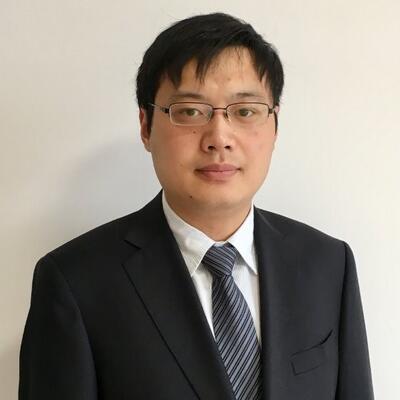
Li Bojia is a Professor at Solar Energy Application Center, China Academy of Building Research, His research mainly focuses on the Solar Thermal Application and Energy Efficiency technologies in Buildings. He holds a PHD in HVAC from Tianjin University. He is contributing to the National Key R&D Program " Key technologies and demonstration on zero carbon building in solar energy rich region". He has also been involved in the IEA-SHC Task 57 "Solar Standards and Certification" and IEA-SHC Task 69 "Solar Hot Water for 2030". In addition, Li Bojia has also finished several National S&T Research Projects from MOST in the fields of solar heating and cooling system development and engineering applications.
Presentation: GHG Emissions Reductions Testing in China for Thermosyphon Systems
Tony Day

Tony is an independent consultant specialising in the leading edge of energy systems research and policy development. He served as the Director of the International Energy Research Centre (IERC), which was established to develop academic-industry partnerships for near market energy solutions. Prior to joining the IERC, Tony had 20 years' academic experience in research, teaching and consultancy of energy efficient buildings, low carbon technologies and energy policy at London South Bank University. His career has also had periods in industry as a practicing engineer and senior manager in an energy management software company. Tony is the author of books, papers and technical guidance across a range of building energy related topics and has expertise in modelling of low carbon solutions, analysis of energy policies, and development of software for energy auditing and renewable energy systems.
Presentation: PV Hot Water configurations, opportunities, barriers, and policy needs
Prof Robert Taylor

Prof. Robert A Taylor’s has served as an Academic at the University of New South Wales since 2011. His main research interest is in the development of ‘next generation’ solar and thermal energy systems. Drawing on the fields of heat transfer and nanotechnology, he is researching new/novel components, fluids, materials, and systems to increase the utilisation of solar energy in society. As such, his main goal is to provide a more efficient and more economic coupling between solar energy and useful thermal and/or electrical energy. In these areas, Prof. Taylor has published over 300 academic outputs which have been cited ~18,500 times according to Google Scholar.
Presentation: Introduction and Task 69 Overview
Bärbel Epp - Moderator

Bärbel Epp is the founder and managing director of the German consultancy solrico. She is responsible for the international newsletter of the web portal www.solarthermalworld.org, reporting exclusively about market and technology trends in the solar heating and cooling sector globally. solrico also created the first online World Map of SHIP suppliers (SHIP = Solar Heat for Industrial Processes) and carries out surveys among the around 70 companies listed on the world map annually. Bärbel Epp graduated in Physics at the University of Oldenburg, Germany.
Webinar organiser
IEA SHC Solar Academy
The SHC Solar Academy is the latest effort by the IEA SHC Programme to share its work and support R&D and implementation of solar heating and cooling projects worldwide. The academy includes webinars by IEA SHC experts on specific results and tools and hosted by ISES, videos highlighting IEA SHC's work and other relevant issues, national days for the exchange of information between national experts and IEA SHC experts and onsite training by IEA SHC experts is offered by request in IEA SHC member countries.
Please find more information on the IEA SHC academy here.