
ISES Board of Directors 2026 - 2028
We are proud to introduce the esteemed members of the Board of Directors of the International Solar Energy Society. This dedicated group of volunteers represents a diverse and experienced range of professionals, united by a shared commitment to advancing solar energy innovation and sustainability across the globe.
Our board members are experts from various fields, including renewable energy, engineering, policy, research, and environmental advocacy. With a wealth of experience spanning continents, they bring invaluable global perspectives and insights to guide the Society’s mission of accelerating the adoption of solar energy worldwide.
As volunteers, each director is driven by a passion for creating a sustainable future and contributing to the growth of solar energy solutions. Together, they lead with a vision to not only meet today’s energy challenges but also to shape a cleaner, greener future for generations to come.
We are honored to have such an accomplished and dedicated group of individuals steering our efforts as we continue to champion solar energy as a key to a sustainable, carbon-neutral world.
ISES Executive Committee (ExCo)
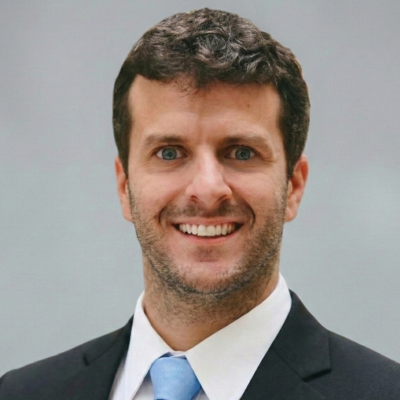
Dr. Francisco Beltrán
Francisco Beltrán holds a degree in Industrial and Mechanical Engineering from Universidad de la República in Uruguay, and boasts over a decade of experience in the energy sector. With a Master of Science in Sustainable Energy Engineering from KTH Royal Institute of Technology in Sweden, he recently defended his PhD thesis at the same institution, focusing on solar photovoltaic-thermal technology and heat pumps. Francisco has also tought various master-level courses at KTH, such as Energy Management, Solar Energy Systems for Buildings and Cities, and Energy Supply Systems for Buildings.
Additionally, Francisco has assumed leadership roles in international organizations, presiding over the Swedish Student branch of ASHRAE and chairing Uruguay’s National Future Energy Leaders Program of the World Energy Council. His contributions have also been recognized globally, being selected as a Global Future Energy Leader by the World Energy Council in 2024.

Dr. Aline Kirsten Vidal de Oliveira
Aline is an electrical engineer graduated from the Federal University of Santa Catarina (UFSC). During her undergraduate degree, she worked with microgrids and did an exchange program at Technische Universität München (TUM), in Germany, where she specialized in integrating renewable energy and electromobility. There, she also did an internship in energy management and electric cars at BMW AG. After graduation, Aline was a temporary teacher at the Federal Institute of Santa Catarina in Florianópolis for a year and also carried out technical trainings on the installation of photovoltaic systems. Since 2017, she is a researcher at the UFSC Solar Energy Research Laboratory (Photovoltaic / UFSC), where she did her PhD with a focus on the inspection of photovoltaic plants. There, she is now a Postdoc researcher and works in R&D projects in the area of photovoltaics, energy storage, green hydrogen and electrical vehicles. She is also a co-founder of the Brazilian Network of Women in Solar Energy (Rede MESol). Aline is also the President of the Brazilian Association of Solar Energy (ABENS) and the Director of External Relations in the Photovoltaic Collaborative to Advance Multi-Climate Performance and Energy Research (PV CAMPER).
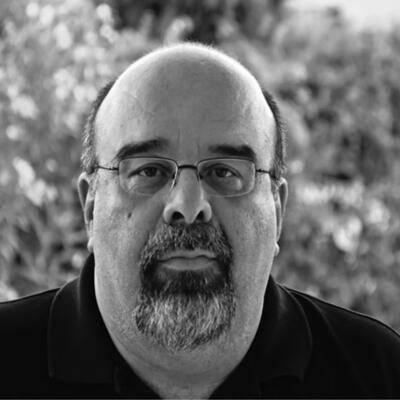
Prof. Andreas Kazantzidis
Andreas Kazantzidis is the Head of Laboratory of Atmospheric Physics and Professor in the Physics Department, University of Patras, Greece. His main research activities focus on solar resource and forecasting with the extensive use of radiative transfer models in synergy with ground-based and satellite measurements. His experimental activities include measuring of solar broadband/spectral radiation using various types of instruments, monitoring of atmospheric parameters as well as data analysis, quality control and reliability of atmospheric measurements. He participates in IEA PVPS Task, dedicated to solar resource for high penetration and large scale applications.
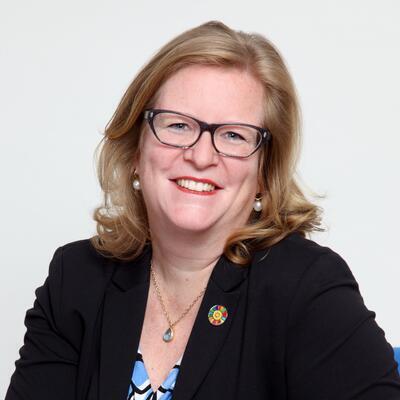
Mag. Christine Lins
In May 2017, Christine Lins co-founded GWNET, the Global Women’s Network for the Energy Transition, which aims at empowering women in the sustainable energy sector.From July 2011 until April 2018, Christine was working as Executive Secretary of REN21, the Renewable Energy Policy Network of the 21st Century, headquartered at the United Nations Environment Programme in Paris/France. Between 2001 and 2011, Ms. Lins served as Secretary General of the European Renewable Energy Council in Brussels. Previously, she worked in a regional energy agency in Austria promoting energy efficiency and renewable energy sources.
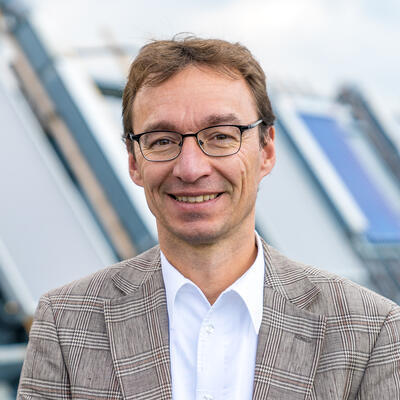
Dr. Andreas Häberle
Prof. Dr. Andreas Häberle is director of the Institute for Solar Technology SPF at the University of Applied Sciences HSR in Rapperswil, Switzerland. Dr. Häberle is a physicist from the Technical University of Munich and earned his PhD at the Fraunhofer Institute for Solar Energy Systems in Freiburg, Germany in the field of concentrating solar thermal collectors. In 1999 he co-founded the company PSE AG that offers various technologies and services for the solar sector.
The institute SPF has been a driving force in research and development of innovative energy technologies for more than 30 years, with focal areas in energy efficiency and renewable energies in general, as well as solar thermal and solar electrical energy in particular.

Dr. Andreas Hauer
Dr. Andreas Hauer studied Physics at the Ludwig-Maximilians-University in Munich, Germany. He made his PhD at the Technical University in Berlin. Now he is the Chair of the Board at the Bavarian Center for Applied Energy Research, ZAE Bayern, with about 60 scientists. There he is responsible for all national and international research and development projects focussed on thermal and electrical energy storage, thermal driven heat pumps / chillers for industrial and building applications. Dr. Hauer is an international known expert on sector coupling, energy storage in general and specialized on thermal energy storage. Today he is leading working groups within Energy Storage Programme of technology network of the International Energy Agency, IEA, where he is member of the Executive Committee. Within the World Banks partnership on energy storage (ESMAP/ESP) he leads a working group on “"Energy Storage for C&I – Decarbonizing Commerce and Industry by Implementing Energy Storage Capacities in Developing Countries". He is also active in the “Investors Dialogue on Energy” of the European Union, member of the steering committee of the working group on energy storage. On the national level, he is Vice-President of the 2012 established Bundesverband Energiespeichersysteme (BVES), German Energy Storage Systems Association, and member of the board of directors of the Forschungsverbund Erneuerbare Energien, FVEE, the renewable energy research association. He is Editor in Chief for the Wiley publication “Advances in Energy Storage”, which was published in May 2022.

Dr. Saman Nimali Gunasekara
Dr. Saman Nimali Gunasekara is an Assistant Professor at Energy Technology, KTH Royal Institute of Technology, Stockholm, Sweden. She obtained her PhD in Energy Technology (2017) and MSc in Sustainable Technology (2011) from KTH, Sweden, and BSc. in Chemical and Process Engineering (2007) from University of Moratuwa, Sri Lanka. She has over a decades’ research and teaching experience on thermal energy storage, district heating and cooling, renewable energy technologies, and from recent years additionally in refrigeration and heat pumping technology. In-parallel, Dr. Gunasekara has also been collaborating with various International Energy Agency (IEA) technology collaboration tasks and annexes, particularly concerning Energy Storage. She has numerous scientific publications as author/co-author and is actively engaged in education covering bachelors, masters, and PhD-level, towards realizing sustainable energy systems.
Board Members
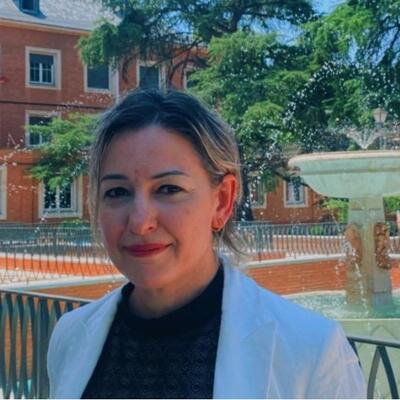
Prof. Berta García Fernández
Dr. Berta García Fernández is Professor of Physics in Department of Forest and Environmental Engineering and Management, School of Forest Engineering and Natural Resources, Universidad Politécnica de Madrid (UPM). She studied Optics at the Complutense University of Madrid (UCM), M.Sc Technical Optics UCM and Ph.D. in Advanced Optical Systems for natural lighting in Architectural Environments (UCM). She is a member of the R&I Centre for the Conservation of Biodiversity and Sustainable Development-CBSD (UPM) and the topic of her most relevant research is focused on Optical Design, Solar energy, Sustainability, Color, Daylighting within the framework of both theoretical and experimental work.

Prof. Caroline Hachem-Vermette
Dr. Caroline Hachem-Vermette, P.Eng., is an Associate Professor in the Department of Building, Civil and Environmental Engineering at Concordia University in Montreal, Canada. Her research addresses building and neighbourhood energy design, solar and photovoltaic systems, and energy resilience in cold-climate contexts. She has developed neighbourhood archetypes for net-zero and resilient performance, providing a systematic basis for designing and evaluating energy solutions from the building to the neighbourhood scale. Her recent work includes neighbourhood resilience tools and building-integrated photovoltaic applications in prefabricated modules. Her projects include living-lab partnerships and monitored solar communities across Canada. She has published widely on solar neighbourhood design and building-integrated photovoltaics, advancing renewable energy in the built environment.
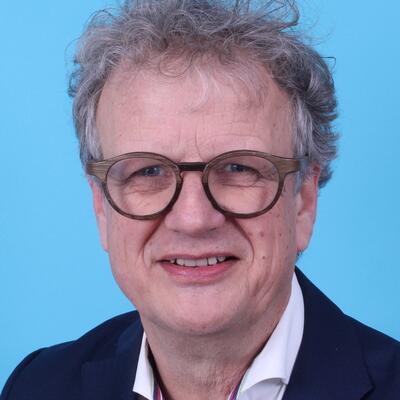
Mr. Chiel Boonstra
Chiel Boonstra works as independent expert of his own company Trecodome in the application of advanced solutions for buildings and cities. He has international experience in applied research and real life construction and renovation projects at building and communities scale. He works with industrial partners, social housing organisations, architects, city planners. Focusing on low demand profiles and seasonal energy storage at community and city scale with the purpose of achieving real time 100% renewable energy driven communities.

Dr. David Ginley
Dr. David S. Ginley is curently Chief Scientist for Materials and Chemical and Computational Science and a Research Fellow at the National Renewable Energy Laboratory. He directed the SolarEnergy Center for India and the US (SERIIUS) and is chief experimentalist for the EFRC Center forNext Generation Materials by Design. Current work focuses on hydrogen production by high temperature electrolysis and geothermal energy conversion and storage specifically in the areas ofdevelopment and application of new materials by computational materials design in the areas of electronic oxides, transparent conducting oxides, organic electronics materials, nano-materials andthe development of process technology for materials and device development including; combinatorial methods, direct write materials, composite materials and non-vacuum processing formaterials in extreme environments. A key focus is looking at how to significantly reduce the cost ofrenewable generated energy and green chemistry through novel devices and processing. He has over400 publications and 40 patents.

Dr. María Herrando
Dr. María Herrando is Principal Investigator and project coordinator in the Instituto Tecnológico de Aragón (ITA), a Spanish public research centre. She is also an Honorary Research Fellow at Imperial College London. She is an Industrial Engineer, with an MSc in Sustainable Energy Futures from Imperial College London and an International PhD in Renewable Energy and Energy Efficiency from the University of Zaragoza. Her specialisation is in solar energy, particularly in solar hybrid PV-Thermal (PVT) systems, which she has researched since 2011. Since 2017, she has expanded her fields to digitalise and decarbonise the industry. She has been working in the coordination and execution of international R&D projects (Horizon Europe, H2020, FP7) for more than 15 years. She has authored 22 publications in JCR-indexed journals and 35 international peer-reviewed conference papers.
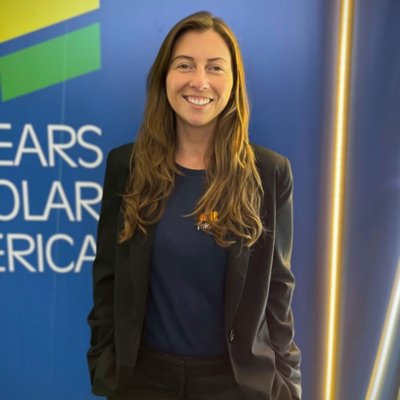
Dr. Marília Braga
Dr. Marília Braga is an electrical engineer with a PhD in solar energy and a researcher at Fotovoltaica-UFSC, Brazil. She has more than a decade of experience in photovoltaic systems research, development and performance assessment. Her work includes PV system design, simulation, commissioning, field diagnostics and energy yield analysis, with experience in more than 300 MWp of PV plants. Her PhD investigated spectral effects in photovoltaic devices, combining experimental and modelling studies of silicon, CdTe and perovskite devices. She has also contributed to research projects on bifacial PV, high-reflectivity ground covers, agrivoltaics, battery storage, electric vehicles and green hydrogen. Marília is President of the Brazilian Solar Energy Association (ABENS) and is actively involved in initiatives to advance solar energy in Brazil and internationally.
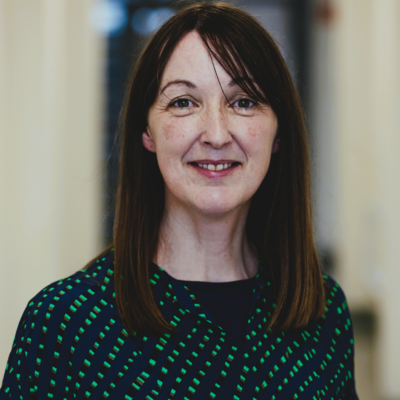
Prof. Sarah McCormack
Professor Sarah McCormack is Professor in Sustainable Energy and Head of the Department of Civil, Structural and Environmental Engineering at Trinity College Dublin, Ireland. Her research focuses on integrating solar energy technologies into buildings, infrastructure and energy systems, including photovoltaics, energy storage, building-integrated solar technologies and agrivoltaics. She has over 25 years of experience leading national and international research, securing funding from the European Research Council (ERC), Horizon Europe, Horizon 2020, FP5–FP7 and national agencies (SEAI, SFI and EPA). She leads Trinity's Solar Energy Applications Group and has published widely, supervising over 20 PhD students to completion. She is passionate about strengthening international collaboration within the global solar community, fostering interdisciplinary research, promoting equality, diversity and inclusion, and supporting the translation of innovative solar technologies into real-world impact.
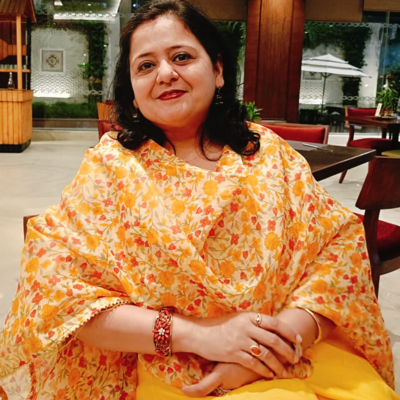
Dr. Subhra Das
Prof. (Dr.) Subhra Das is a leading academician and Director at Ansyst Technology Pvt Ltd, specializing in solar energy systems, agrivoltaics, and Environmental, Social, and Governance (ESG) consultancy. An experienced engineering leader, she leverages technological innovation to foster sustainable development. Through extensive capacity-building initiatives and professional training, she is dedicated to developing green skills and advancing operational efficiency in clean energy ecosystems.
Das earned her PhD in Engineering from Jadavpur University, focusing on the thermodynamic optimization of active solar thermal collectors. Over her 18-year career in research and teaching, she has built self-sustaining academic departments and authored numerous publications on solar resource assessment, agrivoltaics, thermodynamic optimization of solar systems and dust simulation over solar panels.
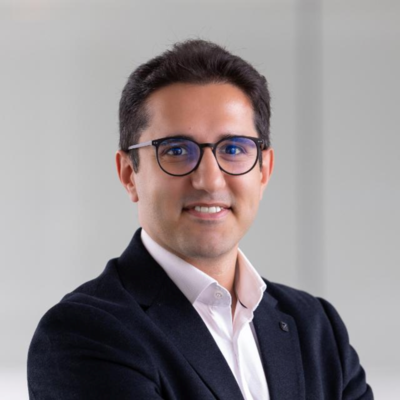
Mohammad Falaki
Mohammad Falaki is a PV Project Manager based in Germany with extensive experience in developing and delivering large-scale rooftop photovoltaic projects across Europe. Having worked on both EPC and project owner sides, he specializes in project management, engineering coordination, grid integration, and stakeholder engagement throughout the project lifecycle. Mohammad is passionate about accelerating the global energy transition by connecting practical industry experience with innovation and international collaboration. As a Young ISES Board Member, he is committed to strengthening engagement between young professionals, academia, and industry while promoting knowledge exchange and supporting the implementation of sustainable solar solutions worldwide. He believes that collaboration across disciplines and regions is essential to advancing renewable energy deployment and achieving a more sustainable future.
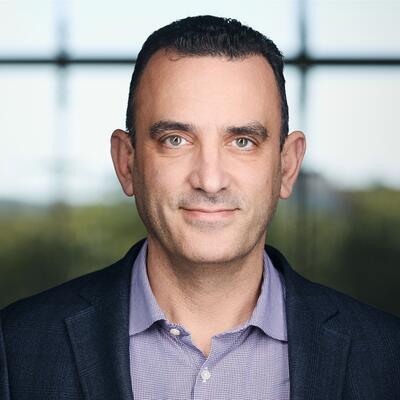
Prof. Alexandros Charalambides
Dr Alexandros Charalambides is a Professor at the Department of Sustainable Development of the Cyprus University of Technology, working on predicting energy production from solar systems and on how innovation and entrepreneurship can assist in our efforts for decarbonization. He holds a PhD in Mechanical Engineering from Imperial College London. As from 2024, he serves on the Board of the Electricity Authority of Cyprus. He is also the founder of Chrysalis LEAP, the first cleantech accelerator in Cyprus, and has trained more than 200 entrepreneurs on how to go from a research idea to a viable business.
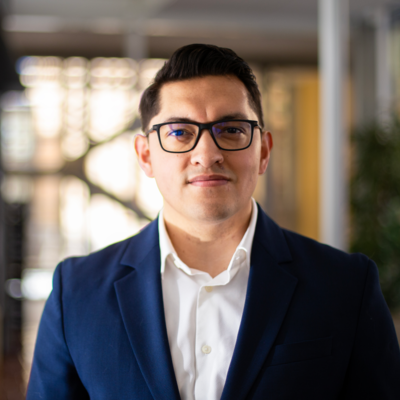
Dr. Iván Acosta Pazmiño
Dr. Iván Patricio Acosta Pazmiño is a solar energy researcher and engineering leader currently serving as Technical & R&D Programme Manager at Absolicon Solar Collectors, while concurrently holding the position of Head of Engineering at MG Sustainable Engineering AB in Uppsala, Sweden. He holds a PhD in Engineering Sciences and a Master's degree in Energy Engineering from Tecnológico de Monterrey, Mexico, and a degree in Mechatronics Engineering from ESPE in Ecuador where he also serves as the Director of the Solar Energy Research Network.
He has participated in numerous international research and commercial projects in the field of solar energy, and holds an Honorary Research Associate appointment at Imperial College London. He is the coordinator of the PVT4EU project and serves as the Institutional Principal Investigator on Horizon Europe research initiatives addressing photovoltaic, photovoltaic-thermal, and solar thermal technologies.

Marisol Oropeza
Marisol Oropeza is an international business and marketing strategist with more than 18 years of experience in the solar energy sector. Based in Berlin and working internationally, she is the founder of matters, a consultancy specializing in business development, marketing, and international cooperation in the renewable energy sector.
She also founded Heat Changers, an international community that raises awareness of solar thermal energy and promotes its wider use through communication, knowledge sharing, and a global network of solar professionals and advocates.
Her work spans solar energy and industrial decarbonization, focusing particularly on cooperation between Europe and Latin America. Marisol has served on the Board of the Mexican Solar Energy Association (ANES). She holds a degree in Business Administration from UNAM and a Master’s degree in European Studies from Hochschule Bremen.