
Message from the Solar Industry: “We Provide the Least Expensive Electricity of Any Technology”
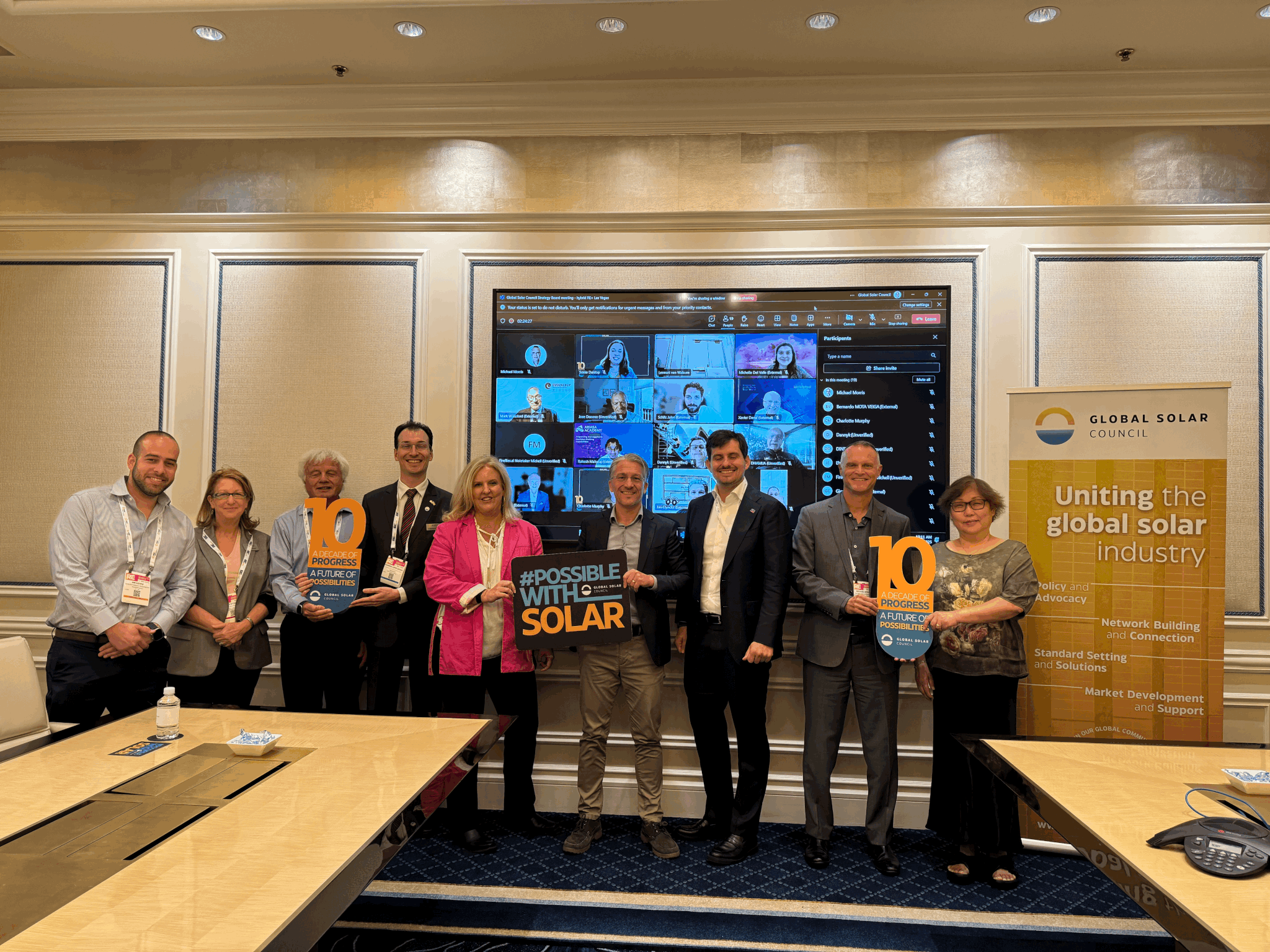
Photo: Global Solar Council LinkedIN post
This year’s RE+ Solar and Storage Expo, which is rightfully promoted as the largest clean energy event in North America, attracted nearly 40,000 participants to the Venetian Expo and Caesar’s Forum in Las Vegas, Nevada. I attended the full Expo and Conference from 8-11 September, specifically to participate in meetings of the Global Solar Council (GSC) Management and Strategy Boards. But, as with everyone else in attendance I was caught up with the incredible enthusiasm represented by over 1,400 exhibitors displaying products from all sectors of the clean energy industry, along with a vibrant Conference program addressing the opportunities as well as challenges facing the industry, and extensive networking events. This enthusiasm clearly results from the global successes of solar plus storage technologies as the primary source of our future electricity supply.
Clearly, the current U.S. Administration’s anti-renewables policies, along with its disdain for any efforts to mitigate climate change, and its erratic and punitive approach to tariffs and global trade, are having an impact on the U.S. markets, and in turn these policies are having a global impact. However, the collective message coming out of RE+ was loud and clear: solar plus storage offers the lowest cost and fastest pathway for deploying new electricity supply virtually anywhere in the world. Solar plus storage is creating good-paying manufacturing and other jobs. But the industry must work harder to get this message out to the general public.
Upon my arrival in Las Vegas, I attended the opening reception and met many colleagues with whom I have been working over the years, on behalf of ISES, to find ways to convey the amazing success stories offered by the clean energy industry. On my first full day there I connected with two staff members of the GSC, Lennart Van Walsum and Michael Morris, as well as the current Chairman of the Board, Rodrigo Sauaia. Collectively they led a panel discussion on global supply chains as part of the RE+ Conference Program.
ISES is a founding member of the Global Solar Council, which was formed during the United Nations Framework Convention on Climate Change (UNFCCC) 21st Conference of the Parties (COP) in Paris in 2015. ISES has also served on the GSC Board of Directors throughout this time. The GSC has become a global player in supporting and promoting the global solar (and now solar plus storage) industry and many national organizations that represent this industry. Under the very effective leadership of Sonia Dunlop, the GSC’s CEO, and the work of her outstanding staff, the Council’s membership levels have doubled in each of the past two years. One very important aspect of GSC’s activities is to support the global target, established during COP 28 in Dubai in 2023, of tripling renewable energy capacity by the year 2030 as a key step in preventing global warming from exceeding 1.5 0C above preindustrial levels, a key goal of the 2015 Paris Agreement. A large majority of this tripling will come from solar technologies.
The Council has launched a number of key initiatives designed to enable the industry to continue and accelerate its growth. Currently the Council’s focus is on grid interconnections and infrastructure improvements, solar energy financing, diversification of supply chains, workforce skills development, global solar training standards, and empowering people with solar PV. ISES remains actively engaged in several of these activities.
At its Board meeting on the morning of September 10 Sonia informed us of the GSC Task Force report on Global Finance released at the recent London Climate Action Week 2025, which provides an in-depth analysis on the global finance landscape and GSC’s policy recommendations for lowering the financing costs of solar PV. The GSC notes that the world needs to invest USD $8.3 Trillion on renewable energy deployment between 2023 and 2030 in order to keep the world on a net-zero carbon emission trajectory by 2050. The Board was also informed of the upcoming release of the Grids Task Force report at New York Climate Week at the end of September. This report will also highlight key policy recommendations to support the doubling of annual grid investments between now and 2030 to USD $600 Billion in order to meet climate targets.
ISES, through its outreach activities and its congresses and journals can not only amplify these key messages coming out of organizations such as the GSC and events such as RE+ but also have its own work on key R&D and innovation developments amplified through these external connections. The current administration in the U.S. has created strong headwinds to the clean energy transformation and has demonstrated blatant hostility towards addressing humankind’s most urgent existential environmental threat of climate change, but we can choose how to respond to these challenges. And that response calls for the renewable energy community to go on the messaging offensive, and to highlight the great opportunities and successes of our clean energy technologies.
As Abigail Hopper, the CEO of the U.S. Solar Energy Industries Association, pointed out during our GSC Board meeting last week, our messaging to politicians needs to focus on the affordability, the capability for meeting the rising demand for new electricity services more quickly than any other technology choice, and the robust job creation that the clean energy industry offers. ISES can play a key role to support and amplify this message.