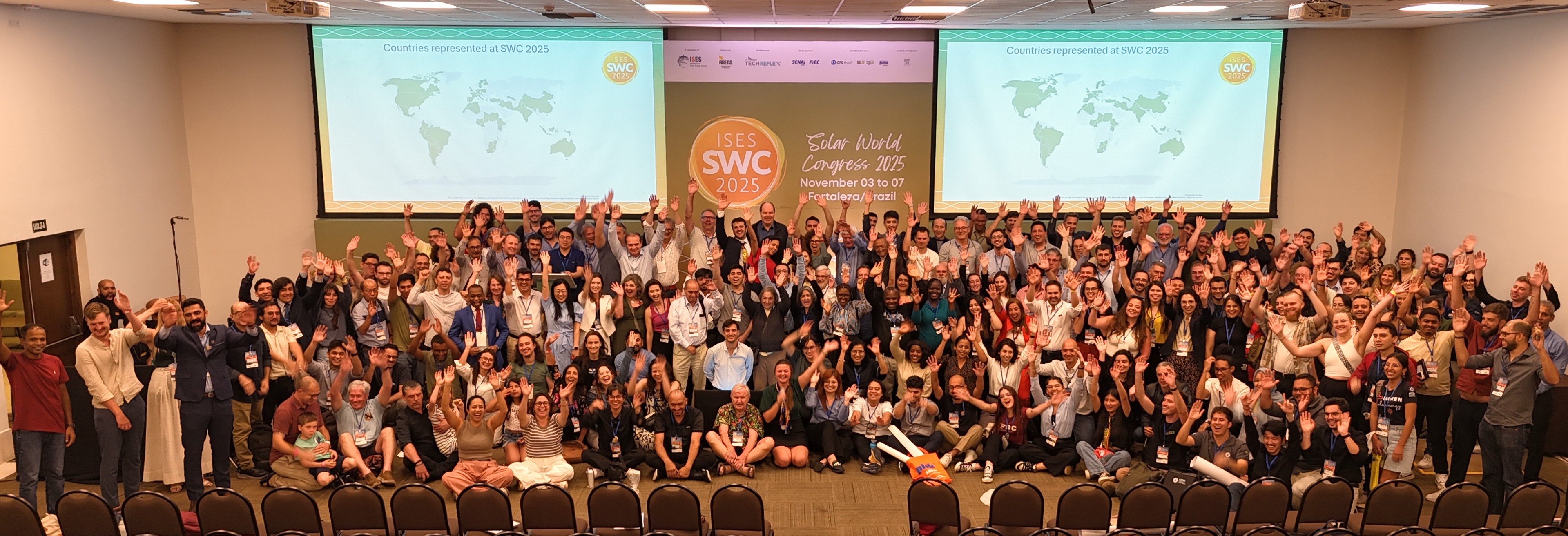
Solar World Congress 3-7 November 2025- Fortaleza, Brazil – A truly memorable ISES milestone
Written by Saman Nimali Gunasekara, KTH Royal Institute of Technology, Sweden, Board Member ISES, and International Scientific Chair, SWC2025.
ISES successfully held our biennial international congress, Solar World Congress during 3-7 November 2025 in the beautiful sunny city of Fortaleza, Brazil. Closely preceding the COP meeting in Belem, Brazil later the same month, SWC2025 marked a milestone in ISES history.
The scientific program for SWC2025 encompassed the vision of ISES towards 100% renewable energy for all used wisely and efficiently (ISES, 2026). To meet the energy demands with renewable energy supply, system integration solutions that meet sustainability standards are essential, as Figure 1 shows. Renewable energy supplies from solar, wind and other sources, which are predominantly intermittent, are the key focus of SWC2025. Optimal energy demand-side management is central to meet the energy demands of all applications, including e.g. residential, industrial, service, mobility, and agricultural sectors, aiming for both enhanced energy sufficiency and efficiency. To cover the energy demands with particularly intermittent renewable energy supply, flexibility and reliability are the key characteristics sought for, with the aim of enabling energy access for all. Energy policies, markets and social dimensions encompass the drivers and mechanisms to accelerate energy transition to reaching the sustainability goals for socially-just transformation, hence playing an overarching role in SWC2025.
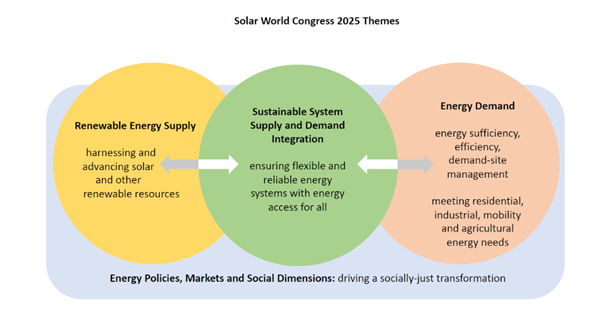
Figure 1. Solar World Congress SWC2025 Scientific Themes. (Chiel Boonstra, (SWC2025, 2025))
The holistic scientific themes in Figure 1 were defined into nine specific scientific themes in SWC2025, namely: 1) Solar thermal power; 2) Solar heating and cooling; 3) PV cell technology and PV systems; 4) Renewable resource assessment and meteorology; 5) Beyond solar: other renewables and associated applications, components, simulation and analysis; 6) Renewable systems applications; 7) Microgrids and grid interaction; 8) Integration of solar energy in architecture and urban planning; and 9) Market, economy, policies, environment and social aspects (SWC 2025, 2025). Each of these themes encompassed multiple sub-themes tailored to the key research and development focuses and questions for solar, wind and other renewable energy sources. The SWC2025 program was embedded into these themes, enriched by nearly 400 scientific presentations (with a 50-50 breakdown on oral and poster presentations) stemming from 500+ accepted abstracts within around 670 abstracts submitted. The composition of the oral and poster presentations by scientific themes is as in Figure 2, and the variety of topics within these themes seen in Figure 3, showcasing the scientific diversity and richness of SWC2025.
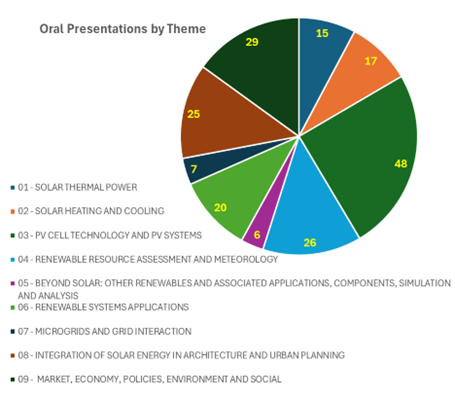
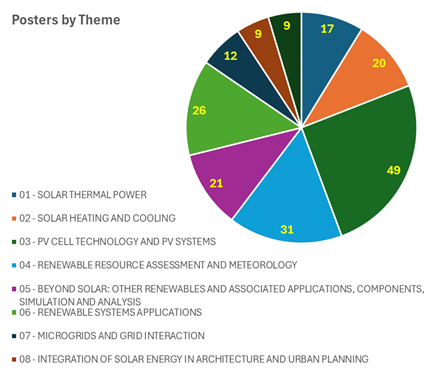
Figure 2. SWC2025 Oral and poster presentations composition by scientific themes. (Saman Nimali Gunasekara, 2025)
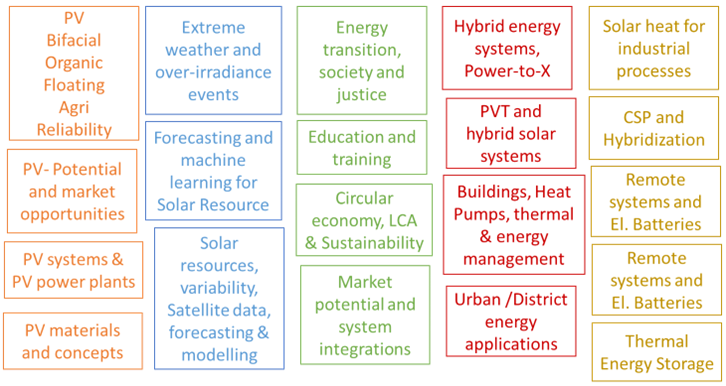
Figure 3. Scientific topics addressed in SWC2025 presentations. (Saman Nimali Gunasekara, 2025)
Five plenary sessions and four panel discussions added color to the SWC2025 program, addressing multifaceted issues today, bringing together energy of people and systems under the Sun. The plenaries brought diverse, renowned international speakers lifting out a multidisciplinary array of topics, from PV technology status and Circularity, Solar-integrated sustainable cities, Innovative solar thermal technologies in sunbelt countries to Extreme whether events. The panel discussions brought to stage versatile teams of panelists highlighting and reflecting on many relevant key topics for SCW2025, namely: Towards 100% renewable energy, Bringing energy to all, from storage to stability, and solar energy in Latin America. Scientific rigor and color has been truly reminiscent throughout the congress.
The diversity among the SWC2025 attendees was equally remarkable. The participants, coming from nearly 30 countries around the world as in Figure 4, were 27% female, 67% male and 7% other/non-disclosed genders as in Figure 4 (b). With Brazil having the largest proportion of participation (185 presentations) at the congress, Sweden, Chile, Germany, Uruguay, Mexico, USA, Peru, Argentina, China, Spain and Switzerland had the next largest proportions of presentations (followed by many other international participation). Overall, there were 26 institutes with 3 or more presentations, 33 institutes with 2 presentations and 185 institutes with 1 presentation as the congress.
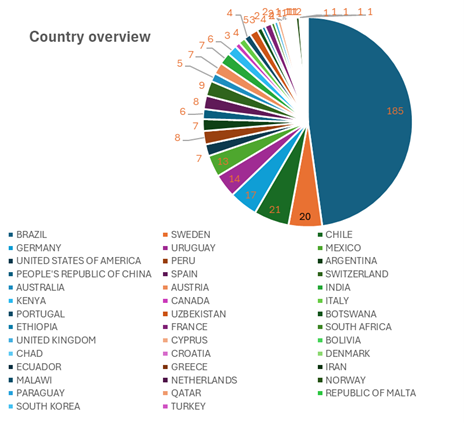
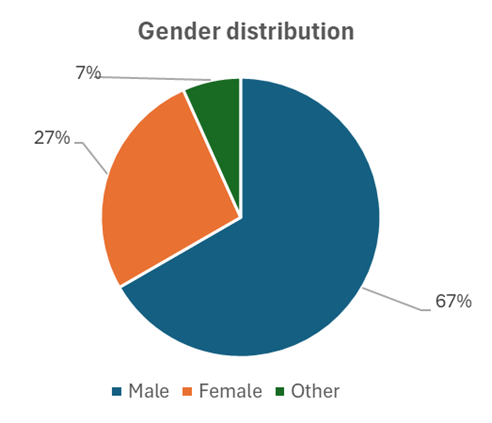
Figure 4. Country and gender representation at SWC2025. (Saman Nimali Gunasekara, 2025)
SWC2025 has been truly an enormous team effort, bringing together many researchers together ensuring scientific rigor and quality, with a 5-person local organizing committee and a 3-person local supporting team; a 12-person international organizing committee, a 2-person scientific chair team (one local and one international); an 18-person scientific theme chair team (one local and international per theme); and some 100+ reviewers and scientific evaluators from all around the world. The joint organization by ISES (headquarters as the backbone) (ISES, 2025) and Abens (with a strong presence in the local organizing team) built the foundation and facilitated these collaborations throughout the process. Their hard work, topped by the very many great scientific abstracts and articles submitted by the authors from around the globe have been central to the success we SWC2025 embraced in Brazil. Three best poster awards were announced as the end of the congress, celebrating this success further.
Altogether, SWC2025 offered an arena for international experts and stakeholders along the entire value chain, to disseminate, discuss and find robust ways forward in accelerating energy transition for combating climate change, on time! We cannot wait to see you again in sunny Adelaide, Australia in 2027, to celebrate yet another SWC milestone together!